

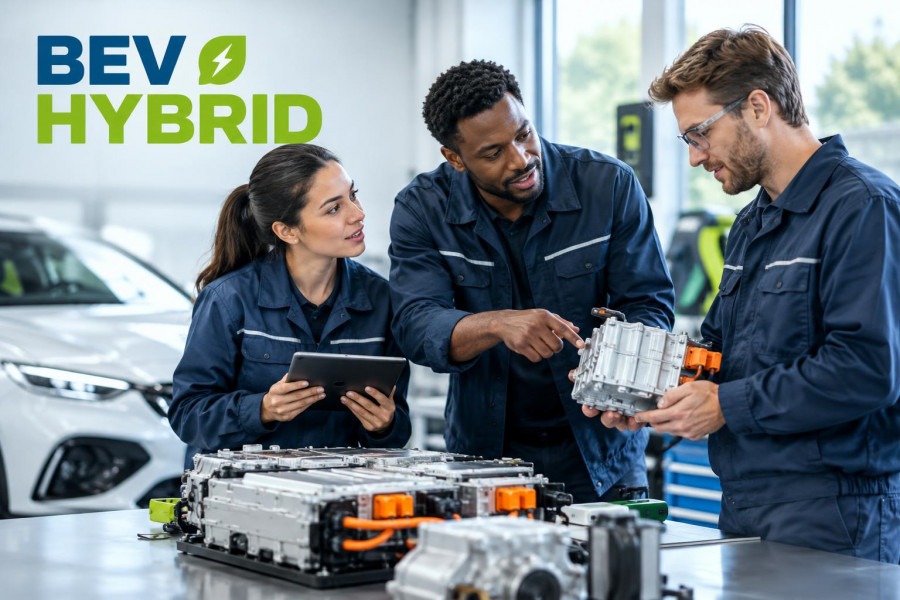
Understanding the Evolving Landscape of Electric Vehicle Service
The automotive industry is undergoing a revolution as advances in Battery Electric Vehicles (BEVs) and Hybrid Electric Vehicles (HEVs) reshape the service landscape. For repair shop owners, these changes are not just technical upgrades; they signify a transformation in how technicians will diagnose and repair vehicles. With rapid advancements in technology, the role of automotive technicians is expanding, leading to both challenges and opportunities.
Embracing New Technologies: The Demands on Technicians
As Dr. Mark Quarto from Quarto Technical Services points out, technicians will need to become adept at managing a wider array of diagnostic challenges. Diagnostic codes are evolving, and traditional fault-finding methods are becoming less effective due to the rapid changes in BEV and HEV technology. Shop owners must ensure their staff is equipped with the necessary skills to navigate this shifting environment.
At present, 89.4 percent of independent repair shops have noted an increase in BEVs coming in for service, while 87.4 percent are experiencing more HEVs. However, less than one-third of these shops have invested in the specialized tools or training required for these vehicles, highlighting a significant gap that needs addressing.
The Tools of the Trade: Preparing for the Future
Technicians face a steep learning curve, but with the right tools, they can greatly improve their diagnostic capabilities. For instance, using oscilloscopes can help technicians visualize real-time data that diagnostic systems might overlook. This advantage is crucial as BEV and HEV systems grow increasingly complex. Upcoming technologies, such as solid-state batteries, represent not just evolution but a revolution in battery design and efficiency.
Strategic Adaptation: Investing in Training and Tools
According to research from IMR Inc., a significant number of independent shops acknowledge the need for specialized training to effectively service electric vehicles. While 42.4 percent have invested in appropriate tools, just over 41 percent have also committed to technician training. This investment is not optional; it is pivotal for survival in a market where BEVs and HEVs are becoming more common. Shop owners need to ensure that their teams are staying current with these advancements.
Market Perspectives: Customer Trends and Expectations
The demand for BEV and HEV servicing will certainly change the landscape of independent repair shops. Interestingly, while 54% of repair shops are currently servicing BEVs, many do not actively market these capabilities—indicating a missed opportunity to attract this growing customer base. Visibility is key in today’s competitive market, and effectively communicating service offerings can significantly improve business prospects.
Conclusion: Act Now for a Sustainable Future
The time for shop owners to act is now. Investing in training, equipment, and marketing strategies to promote BEV and HEV capabilities is crucial as the automotive landscape continues to evolve. This proactive approach will not only enhance service offerings but will also ensure that technicians are prepared for the challenges ahead. Adapting today will pave the way for a more profitable tomorrow in an increasingly electric future.
To ensure your operation remains competitive and well-prepared for upcoming changes in the automotive industry, consider investing in training and new equipment now. By doing so, you'll not only enhance your service capabilities but also position your shop for success in the thriving realm of electric vehicles.





Write A Comment