

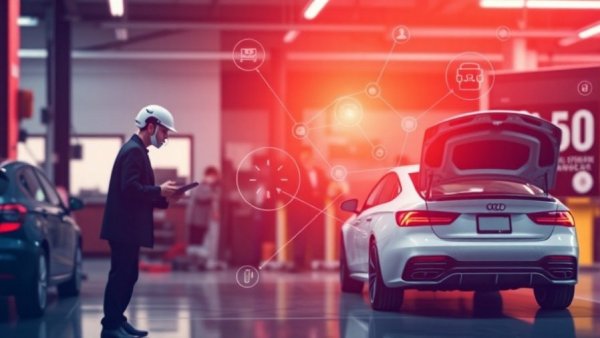
How AI Is Transforming Auto Repair Services
In an industry historically known for its blend of mechanical expertise and human interaction, artificial intelligence (AI) is making waves in unexpected ways. From paperwork reduction to enhanced customer communication, auto repair shops are at a critical juncture, where embracing new technology could mean a decisive advantage over competitors.
Revolutionizing Administrative Tasks
Many auto shops, like M-Spec Performance in New York, have begun incorporating AI to streamline labor-intensive tasks. Adam Liu, the owner, highlights that AI is particularly effective in aiding technicians who struggle with English. “AI writes up their technical notes, making them easier for customers to understand,” he notes. This goes beyond just saving time; it ensures that important details are communicated accurately. The reduction in paperwork allows technicians to focus on what they do best—working on vehicles and communicating effectively with customers.
Potential Risks and Considerations
Despite the positive impact AI can have, caution is advised. Experts in the field stress the need for shops to test AI tools thoroughly before fully integrating them. Tony Mercury of Autoshop Solutions points out that not all AI solutions are created equal. “There are countless new startups promising results, but many lack a solid track record,” he warns. The importance of choosing reliable technology cannot be overstated, especially in sectors relying heavily on personal relationships with customers.
AI’s Role in Marketing and Customer Engagement
AI doesn’t only impact the technical side of auto repairs; its role in marketing is burgeoning. Data analytics powered by AI can assist shop owners in understanding customer preferences, leading to more targeted marketing strategies. According to a survey conducted by Ratchet+Wrench, 20% of respondents find the greatest potential for AI in marketing and customer communication.
Emphasizing Human Skills Amid Technology
One of the industry’s most pressing challenges is ensuring that AI complements, rather than replaces, human craftsmanship. Liu encourages shop owners not to fear AI but to see it as an opportunity to enhance their team's capabilities. “You don’t have to do everything with AI,” he says, “but being unwilling to explore it could leave shops behind.” The balance between leveraging technology and maintaining human touch is crucial.
Future Trends and Predictions
The landscape for AI in auto repair is dynamic and continually evolving. As the technology grows more sophisticated, its applications are likely to expand beyond administrative tasks into areas like predictive maintenance and customer relationship management. However, as experts caution, this growth should always be paired with a focus on ethics and transparency; the human element in auto repairs is irreplaceable.
Final Thoughts: Preparing for an AI-Driven Future
As AI becomes ingrained in the operational fabric of auto repair shops, business owners must remain vigilant. Understanding where to apply AI effectively while maintaining the personal connections that drive customer loyalty is critical. Those who embrace this technology thoughtfully will position their shops for success in a rapidly changing industry landscape. By promoting a culture of exploration and adaptation, the future of auto repair can be not just automated, but also enhanced.
If you're ready to explore how AI can transform your auto repair shop, stay informed about the latest developments in technology and strategize your implementation effectively. The future belongs to those who are prepared.




Write A Comment